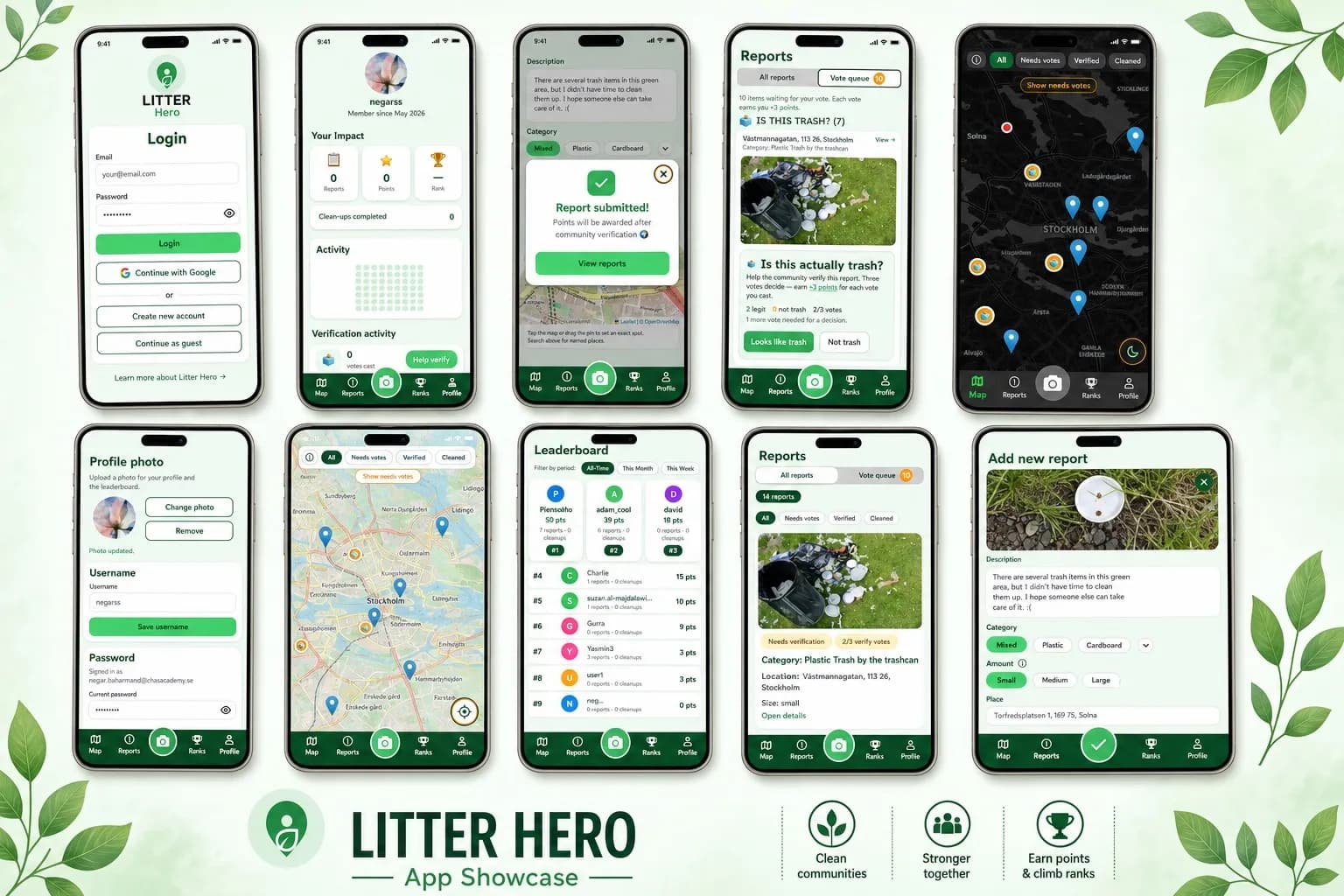
When I moved to Sweden, I noticed how much everyday cleanliness came from people looking after their own surroundings. That shared sense of responsibility stuck with me. So when the idea of building something for the community came up, I immediately thought: what if we could use tech to motivate even more people to do that? Something like Pokémon GO, but for picking up trash. That’s how Litter Hero was born.
TABLE OF CONTENTS
Open TABLE OF CONTENTS
What Is Litter Hero?
Litter Hero is a community-driven civic gamification web app where you can report litter, pin it on a map, and earn points when your cleanup gets verified by other users. It’s inspired by Håll Sverige Rent — Sweden’s non-profit that mobilized over 840 000 people in a single year to clean up their surroundings, but with a gamified twist to keep people actually coming back.
The flow is pretty straightforward:
- See trash → snap a photo → drop a pin on the map → submit
- Clean it up → submit proof → community votes to verify
- Get points → climb the leaderboard → feel good about it
The Stack
We went with a modern, production-style setup:
| Layer | Tech |
|---|---|
| Frontend | React, TypeScript, Vite, Tailwind CSS |
| Backend | Node.js, Express, TypeScript |
| Database | PostgreSQL + PostGIS, Drizzle ORM |
| Auth | JWT + Google OAuth |
| Storage | Garage S3 |
| API Docs | Swagger / OpenAPI |
| DevOps | GitLab CI/CD, Kubernetes |
We also had proper engineering practices, merge requests had to be reviewed before merging, pipelines had to pass, and we deployed on Kubernetes.
How It Works
Reporting Litter
You open the app, take a photo, categorize the litter by type and size, and your GPS location gets tagged automatically. One submission and it’s live on the map for everyone to see.
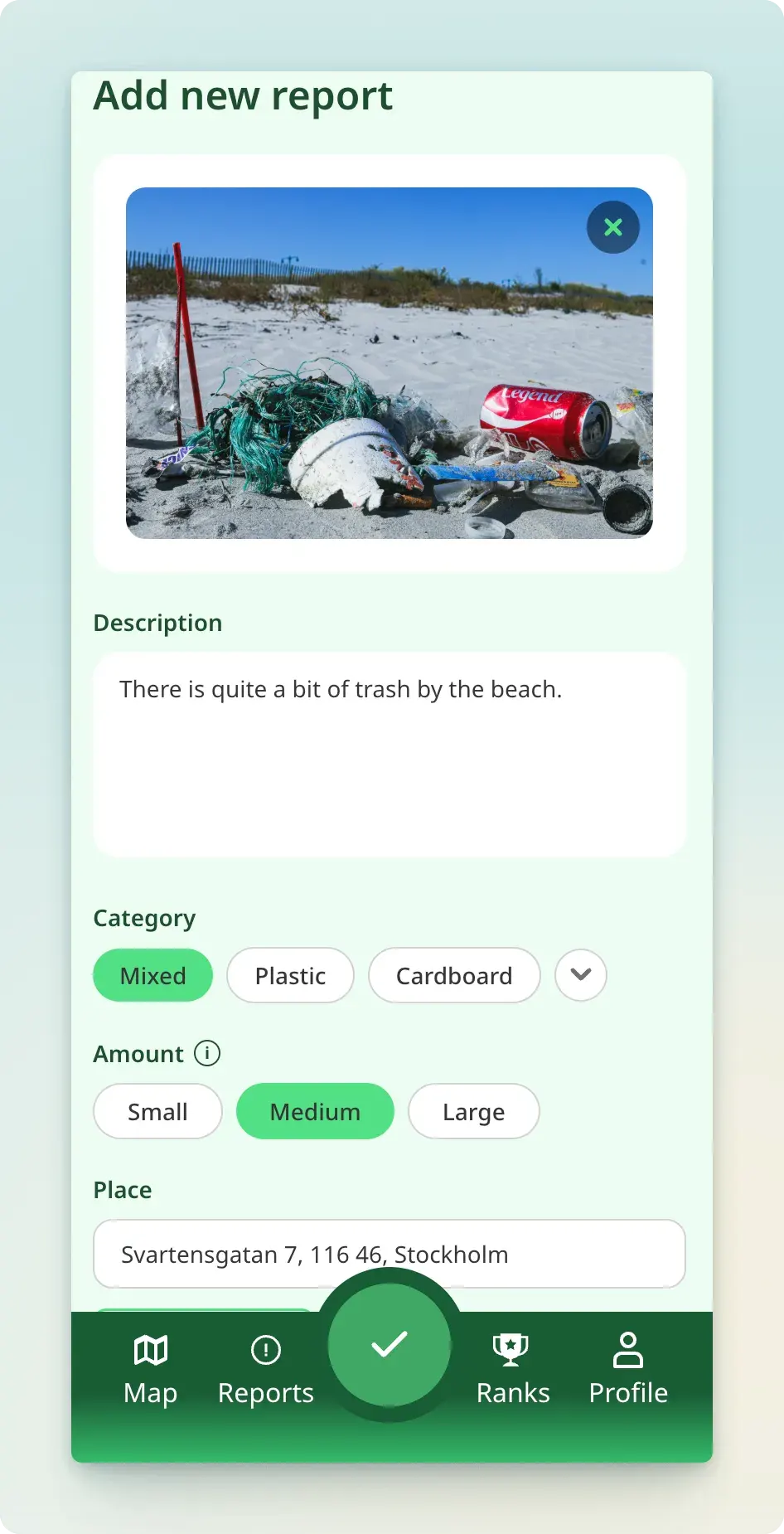 Litter reporting form with automatic location tagging
Community Verification
This is the part I’m most proud of conceptually. When someone claims they’ve cleaned up a spot, they submit photo evidence, and other users vote on whether it’s legit. The community becomes the moderator. No fake cleanups, no easy point farming.
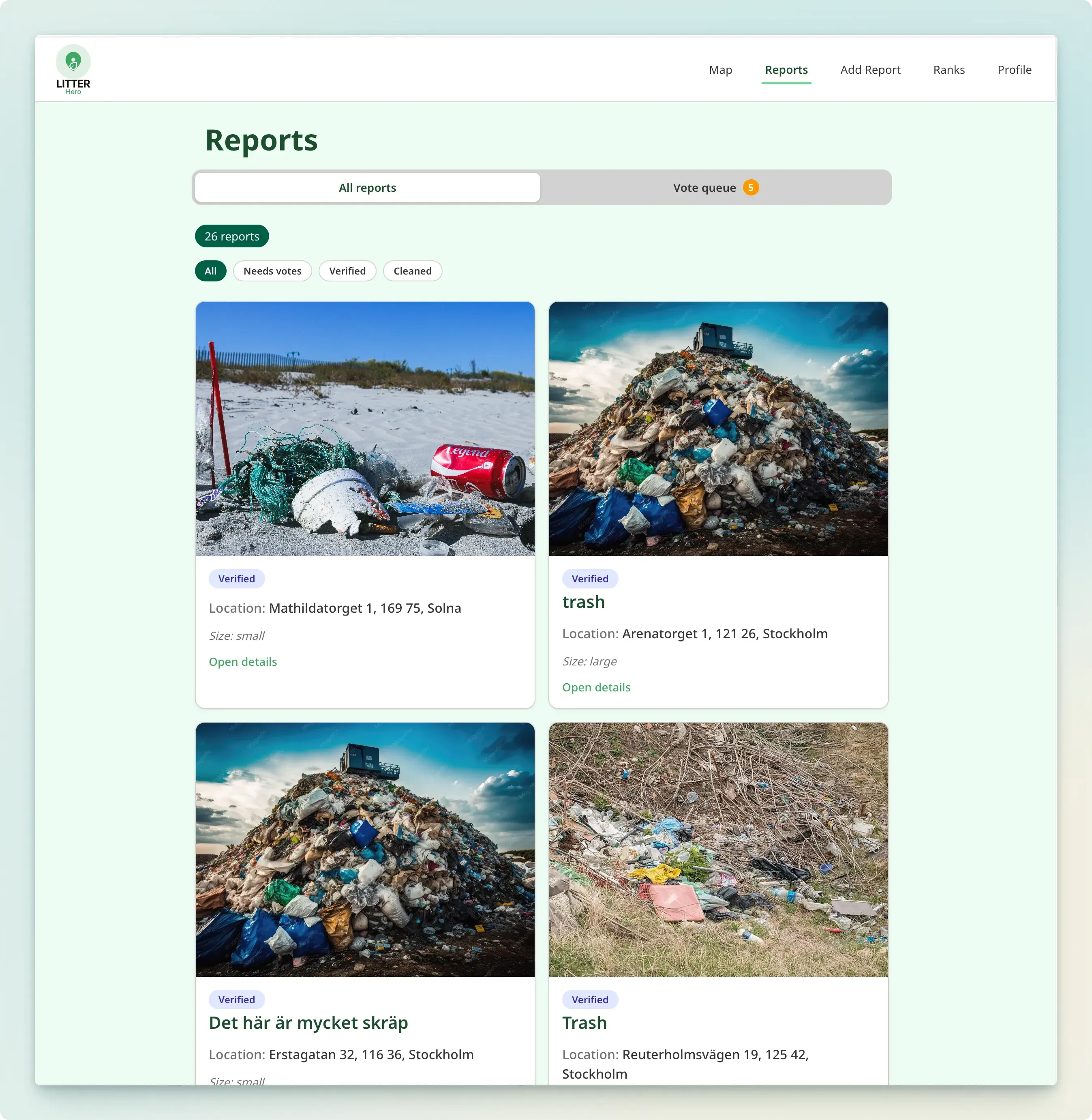 Community voting interface for cleanup verification
Points, Badges & Leaderboard
Points are awarded based on litter size and verified cleanups. You also unlock badges for milestones like your first report, first cleanup, and first verification vote — and there’s a streak system to keep you coming back. Turns out a little friendly competition goes a long way, even when the prize is just a digital badge for now.
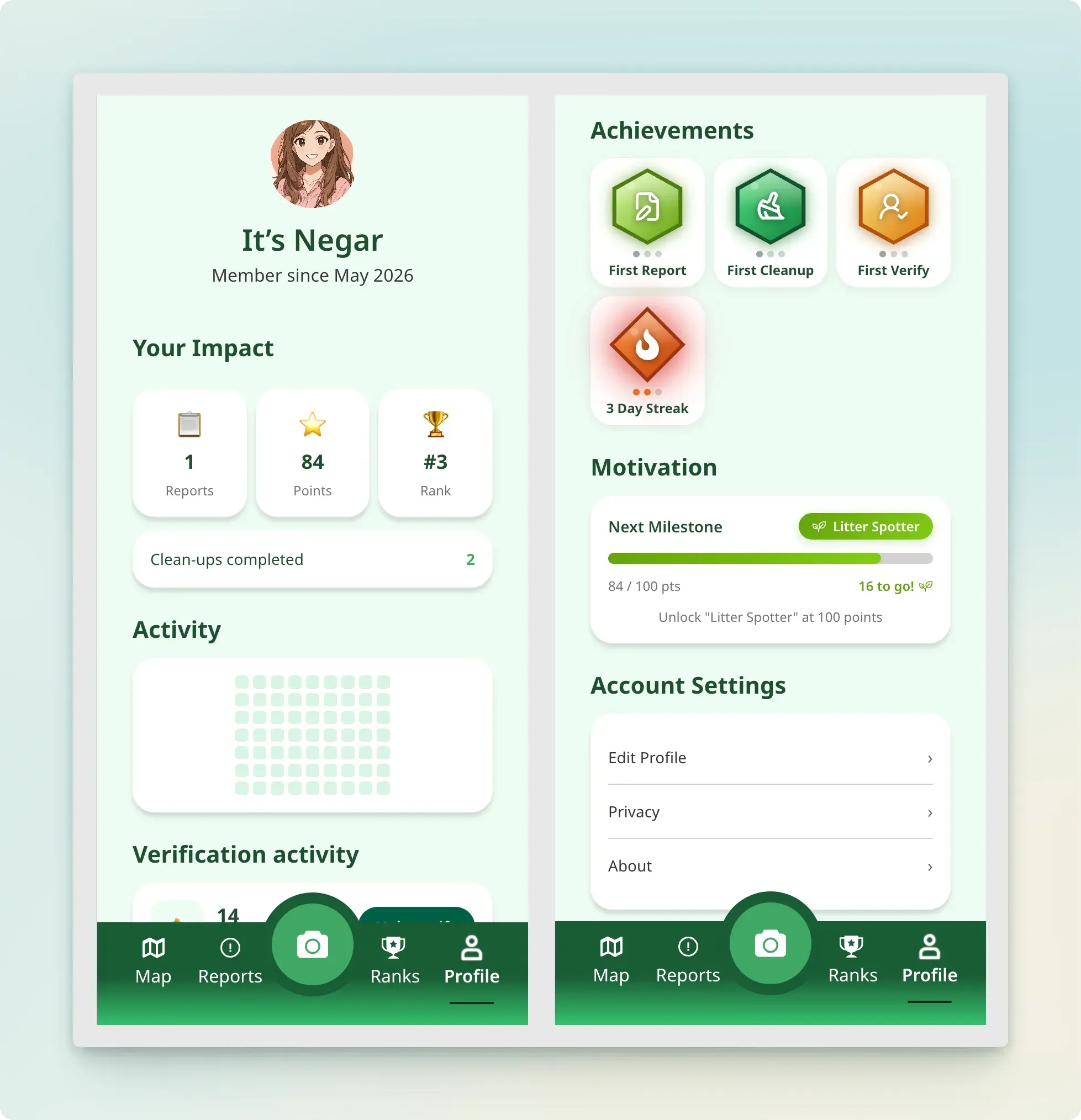 Left: your impact stats and activity — Right: badges, streak and next milestone
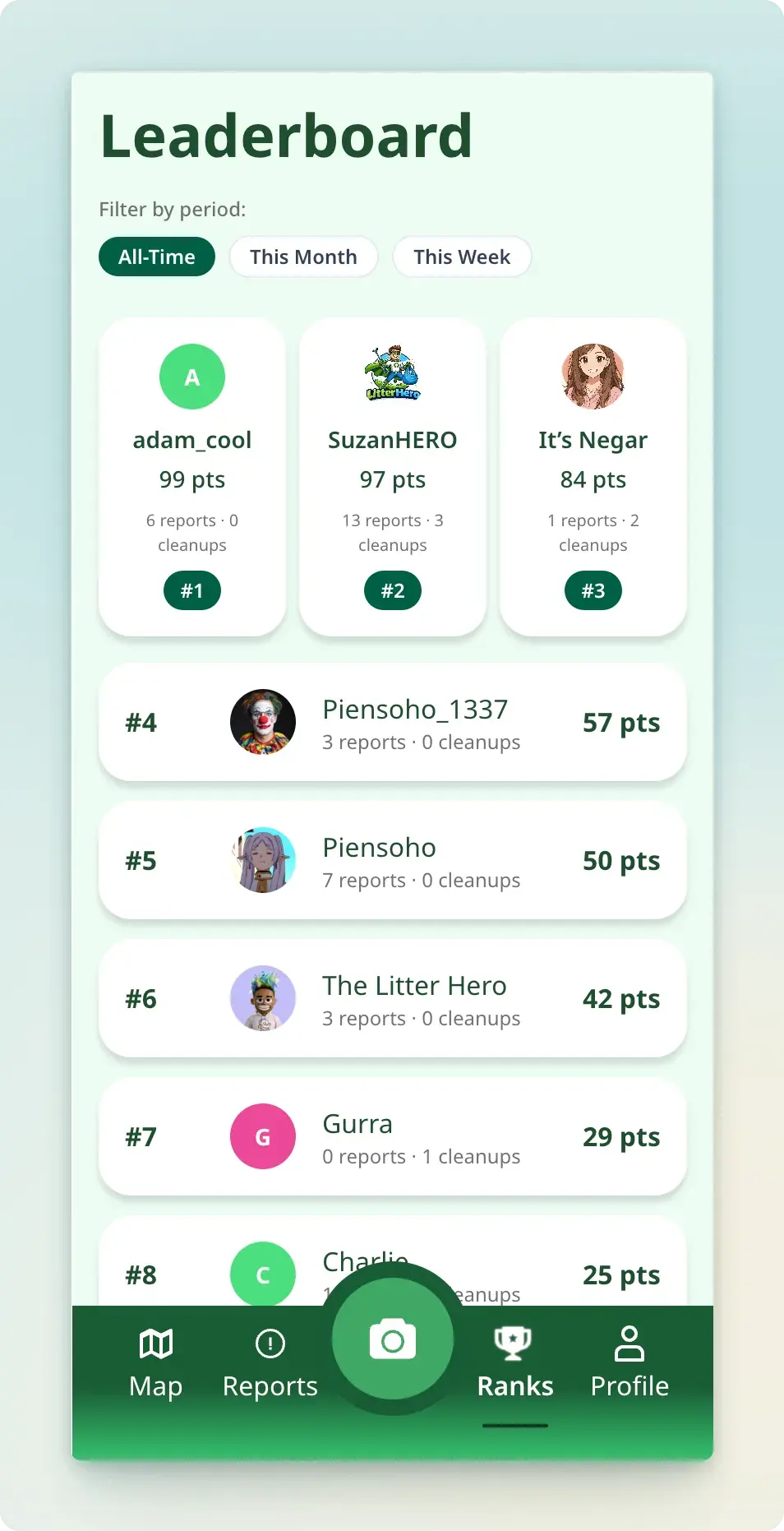 The all-time leaderboard
The Hardest Part
The voting system was genuinely tricky. How do you verify a cleanup is real without a human moderator reviewing every single submission? We solved it with peer verification — but it’s not bulletproof. There’s still ways to game it, and I kept thinking there should be a better way.
The answer I think, is AI. Image recognition that compares before/after photos and flags suspicious submissions automatically. That’s probably the first thing I’d build if we kept going with this.
The Moment Everything Clicked
There’s a specific kind of joy when you’ve been working on frontend and backend in parallel for weeks and you finally connect them. APIs respond. Images upload to Garage S3. Data flows end to end. When that happened on Litter Hero I genuinely did a little victory dance at my desk, no shame.
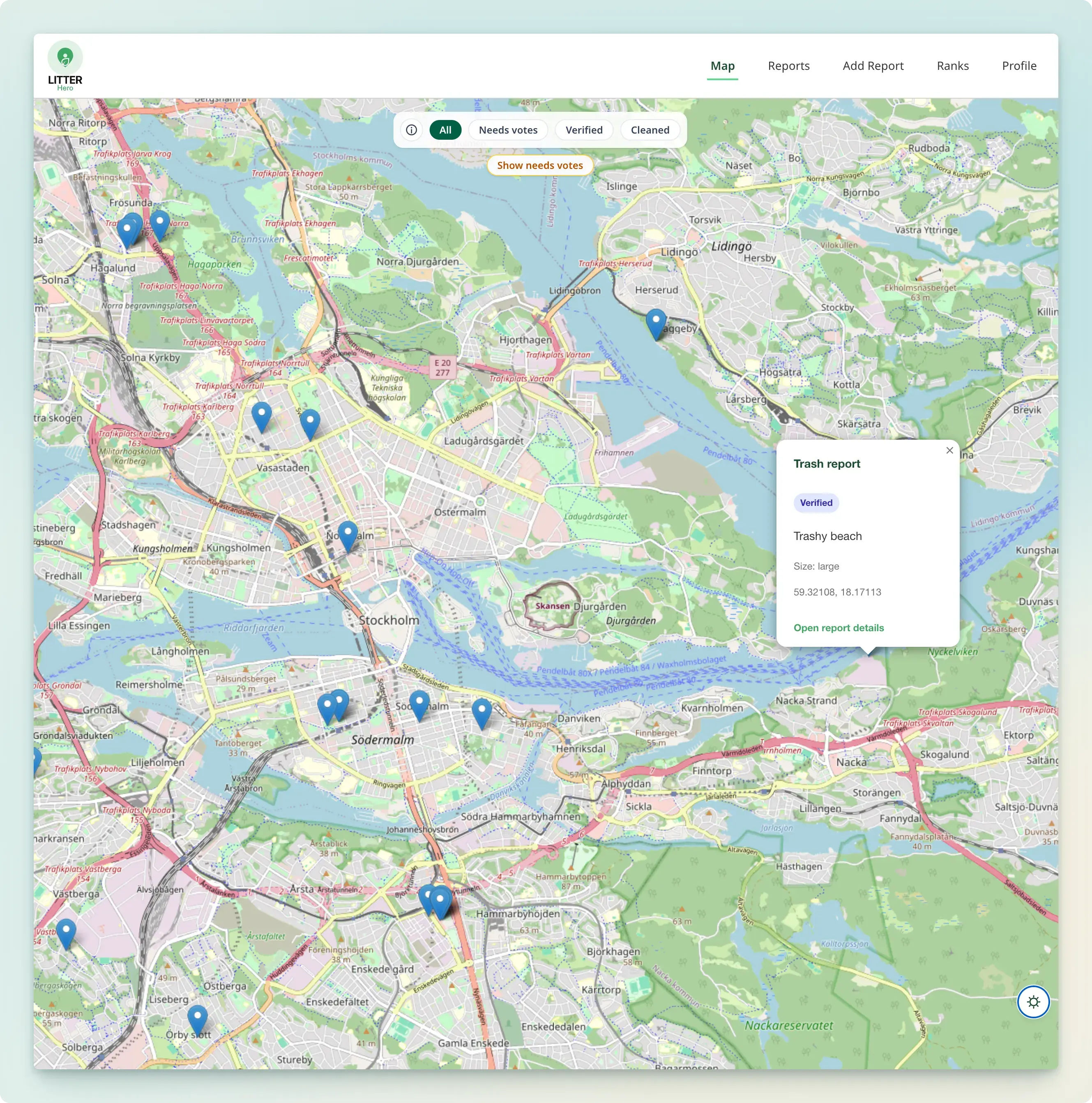 The map view — every pin is a real report from a real user
The Team
This wasn’t a solo project. We were a team of five developers, three UI/UX designers and a DevOps engineer. I worked fullstack, which meant jumping between React components and Express routes throughout the day. It also meant I got to see how every piece connected, which I really loved.
What I’d Add Next
If I could keep building this:
- AI-powered verification — let a model analyze before/after photos instead of relying only on community votes
- Real rewards — actual gifts or offers not just badges (badges are cool but a free coffee or 10 percent discount on a gym pass hits different)
- A more polished UX — especially on mobile, there are some flows that could be way smoother
See the Code
The code is open and I’d love for you to take a look:
If you’re curious about the voting logic, the Garage S3 integration or how we structured the CI/CD pipeline, feel free to open an issue or just reach out. I’d genuinely love to talk about it.
Built with React, Node.js, PostgreSQL, and the quiet hope that fewer people leave their trash on Stockholm’s streets.